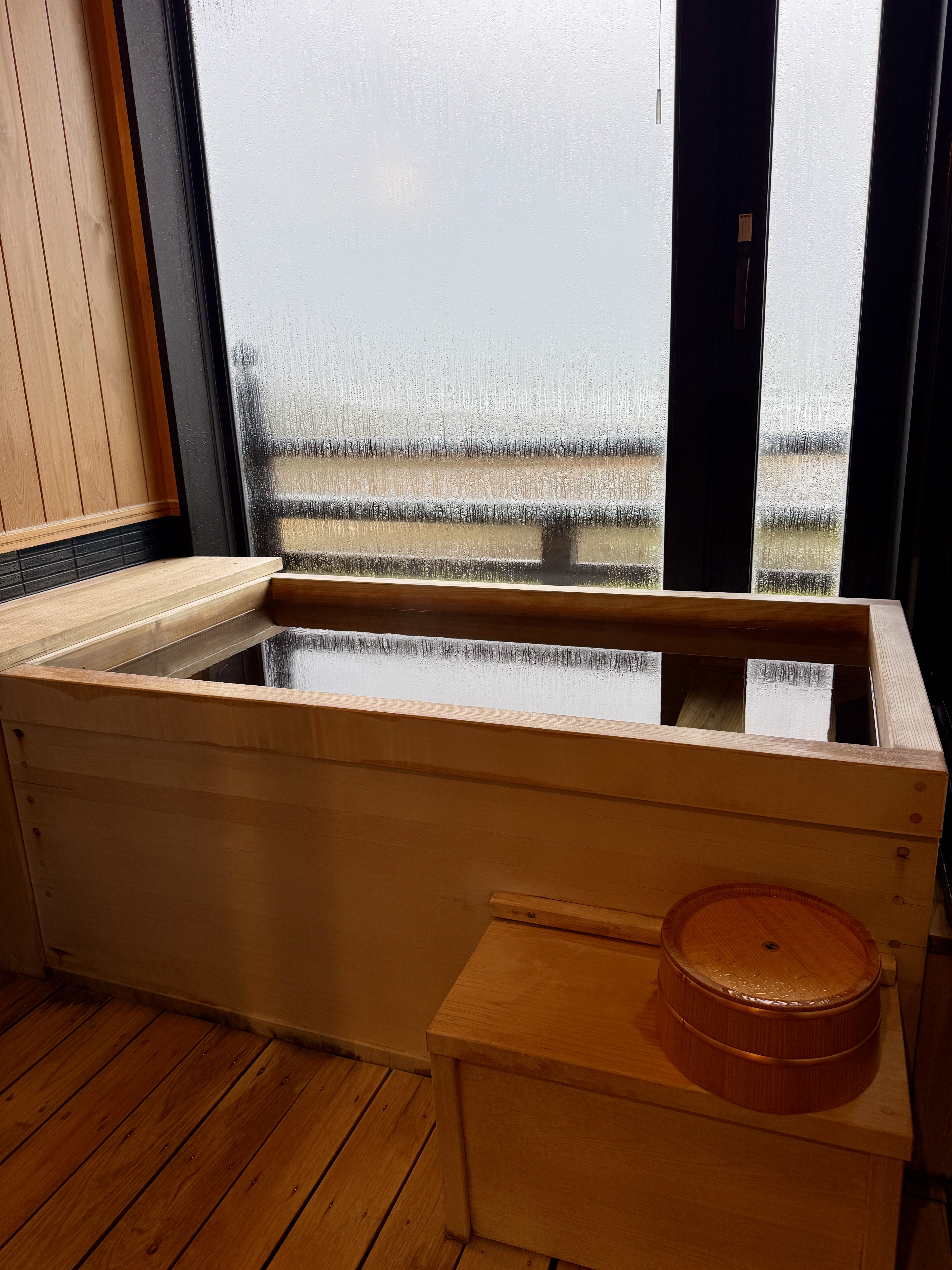
I thought I understood what a crab dinner entailed. Apparently, I did not.

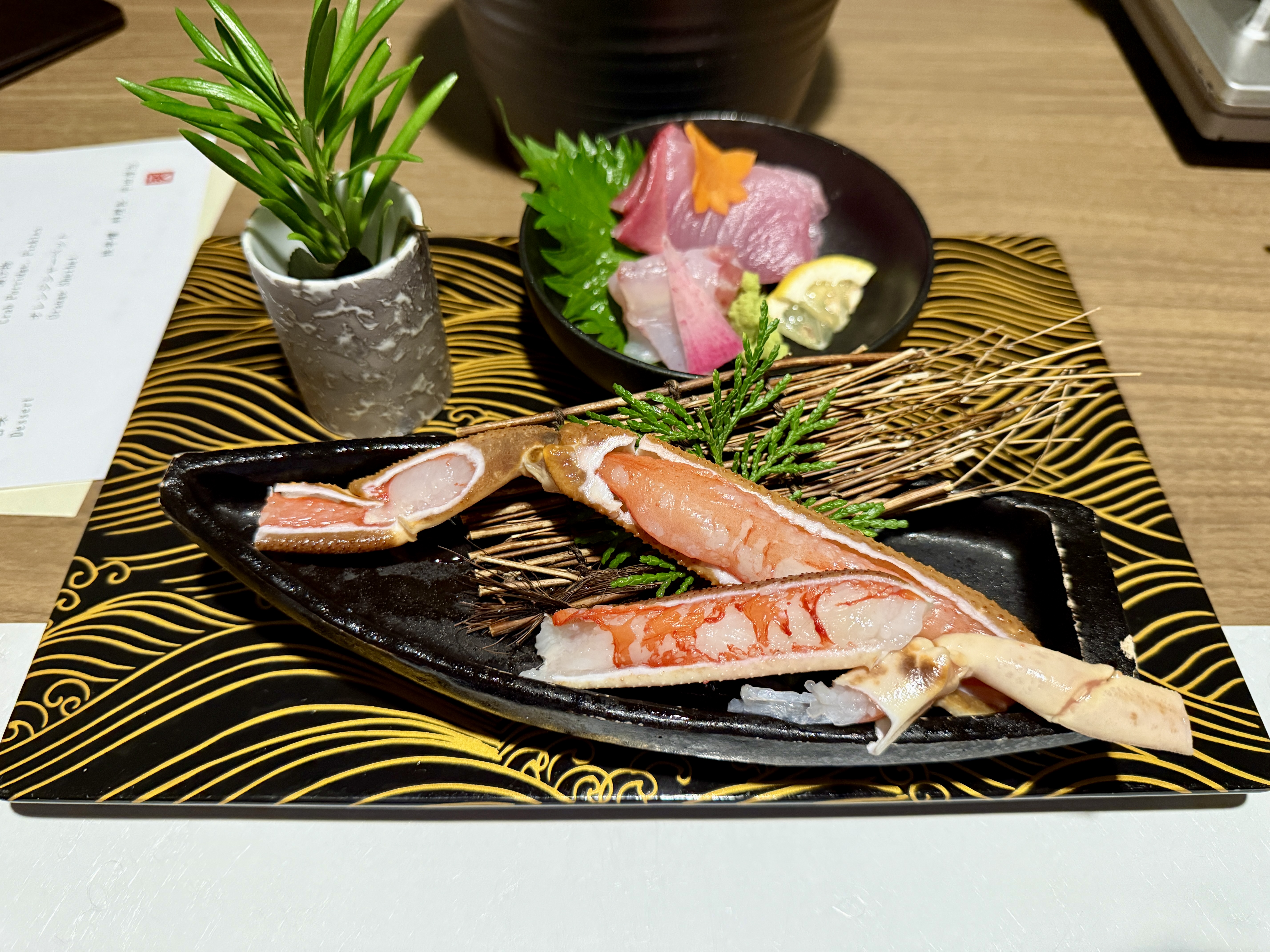
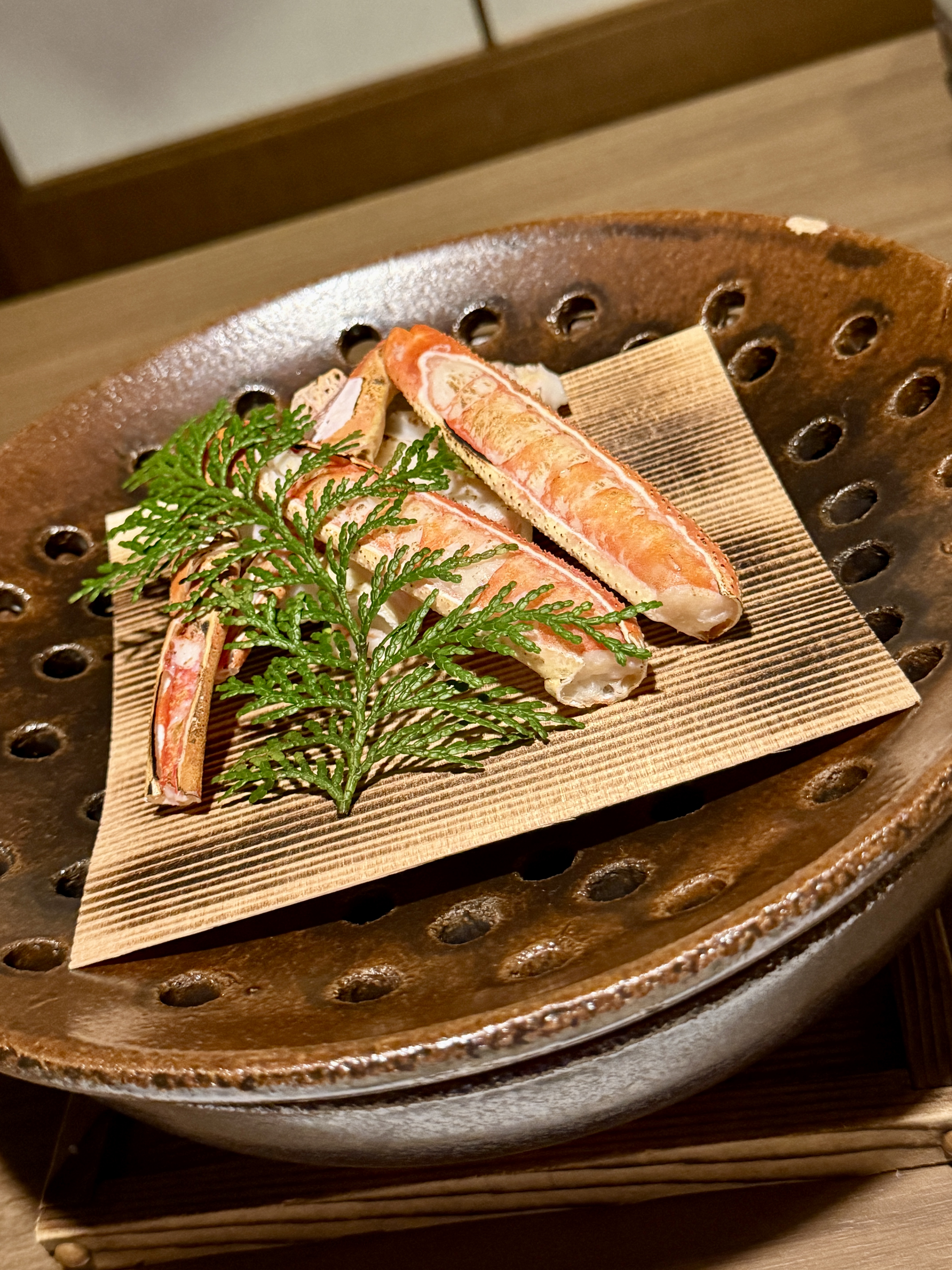
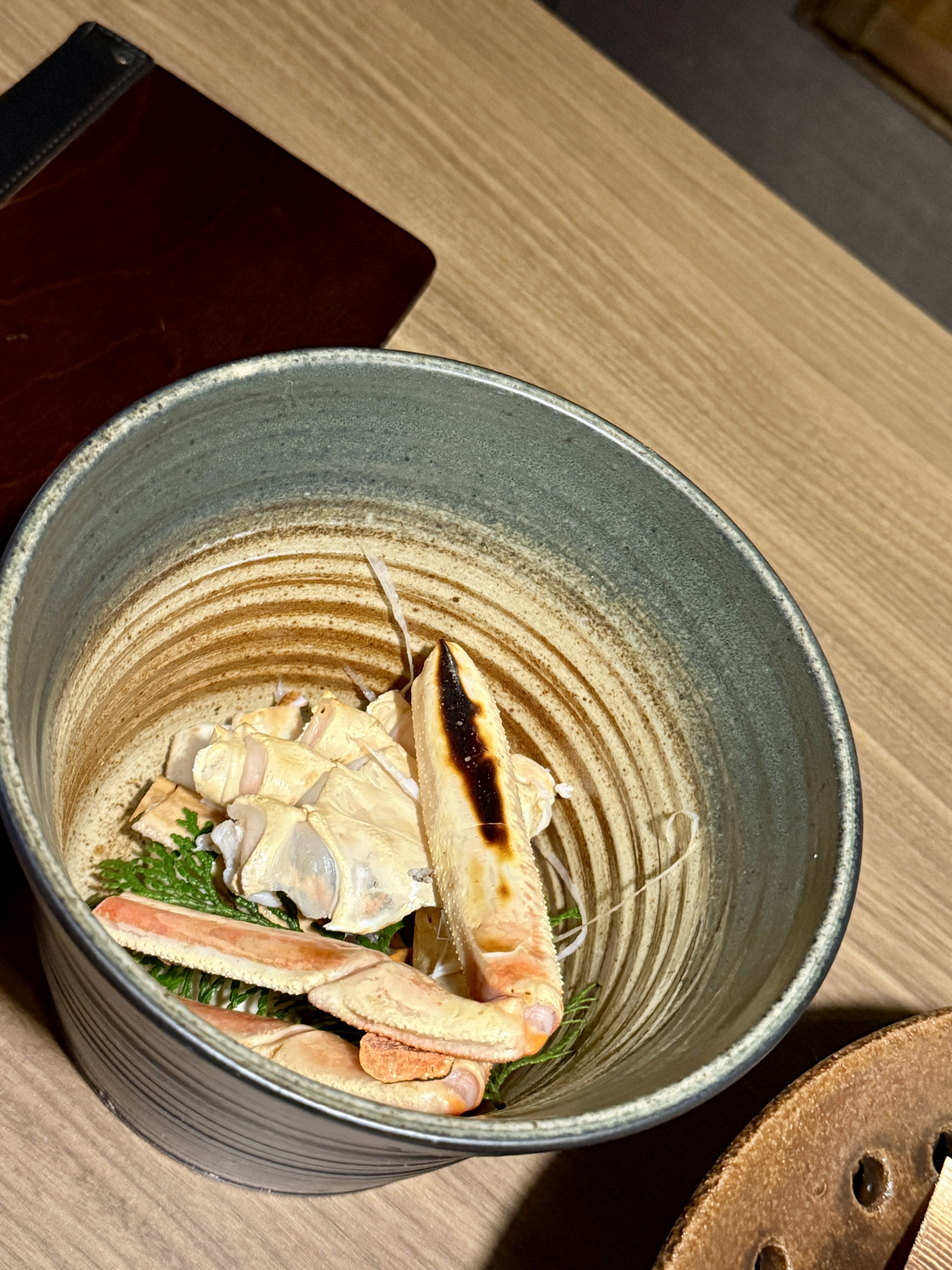
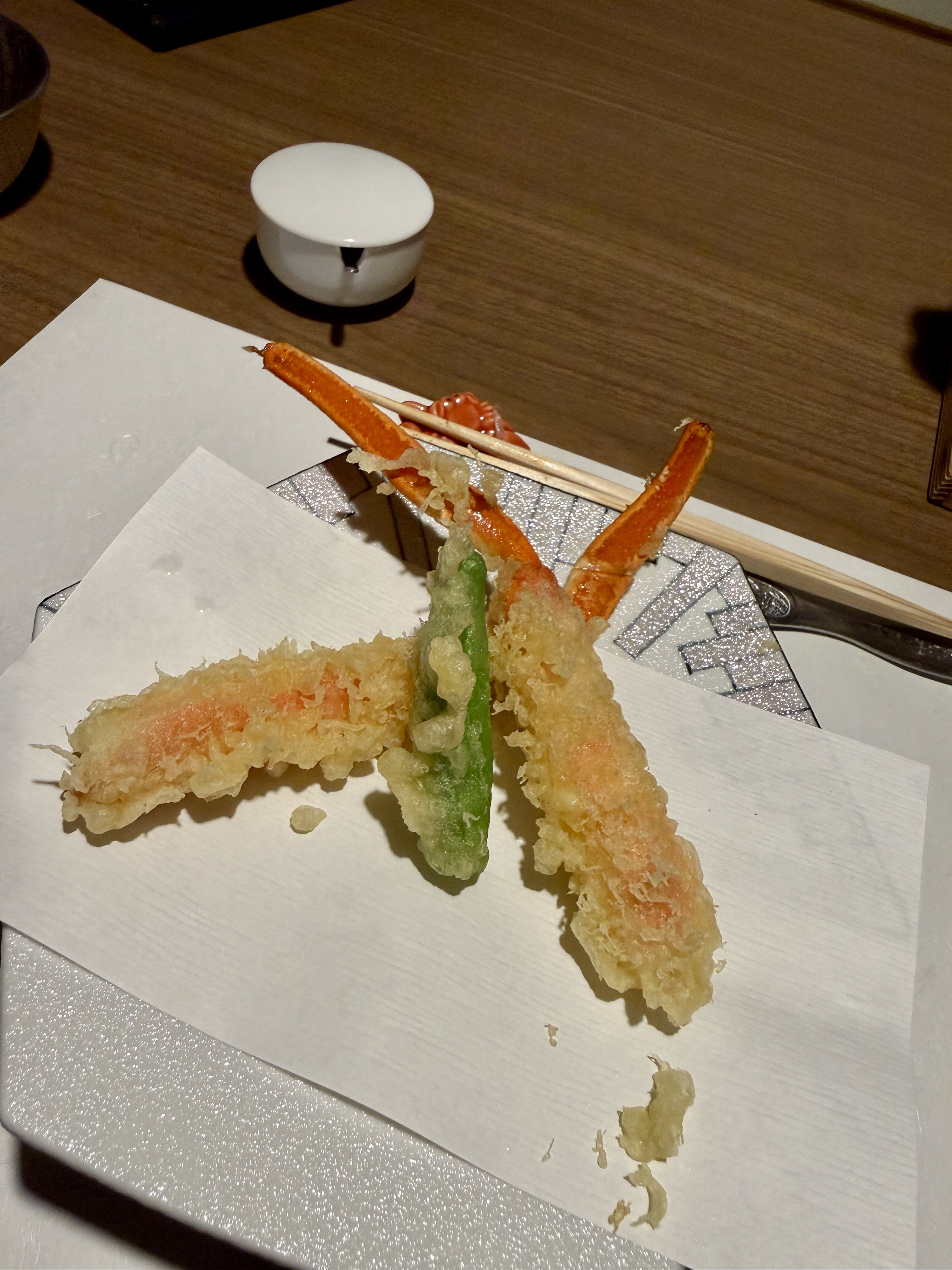
My first evening at Ryori Ryokan Yuhigaura introduced me to an extraordinary celebration of crab. Not simply a meal featuring crab, but an entire procession of beautifully presented dishes, each highlighting this wonderful crustacean through different preparations and cooking techniques.
And the timing couldn’t have been better. I’d arrived on Japan’s Sea of Japan coast just as snow crab season was getting underway.
Fortunately, my lovely guide Yukiko had called ahead and requested smaller portions for me. An excellent idea, considering I generally prefer smaller meals throughout the day rather than one enormous dinner.
Even with the reduced portions, the meal eventually became overwhelming. Deliciously overwhelming, but overwhelming nonetheless.
A Master Class in Crab
What impressed me most was the kitchen’s ability to showcase the same ingredient in so many different ways without making everything taste the same.
The presentations were exquisite. Every course seemed thoughtfully composed, and the cooking techniques brought out different qualities in the crab.
One of the first revelations was the crab soup. It tasted unmistakably of crab. Imagine that! Not potato, not chicken stock masquerading as seafood soup, but the clean, delicate essence of crab itself.
Then came an extraordinary savory egg custard, chawanmushi. Silky doesn’t begin to describe its texture. The Japanese certainly know their way around eggs.
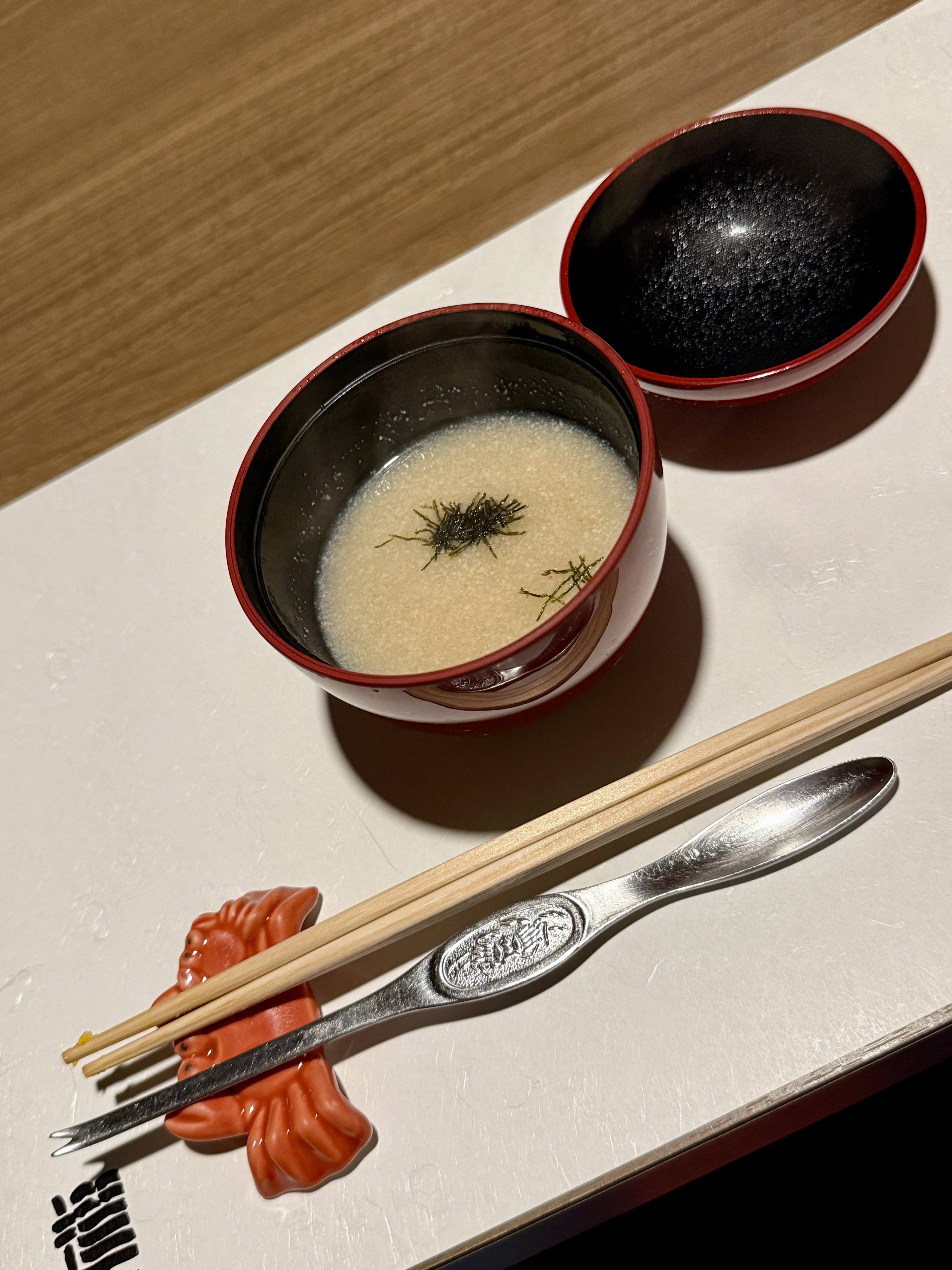
And just when I thought it couldn’t get any better, I discovered crab meat tucked into the bottom.
I was beginning to wish I’d abstained from seafood for three days before arriving.
A Wagyu Intermission and Dancing Mushrooms
Just when I thought I might be developing claws myself, the kitchen provided a welcome interruption to the crab festivities: Wagyu beef.
This was another do-it-yourself cooking experience. Everything was beautifully arranged and ready for me to cook on my own little hot plate. Tender slices of Wagyu, fresh vegetables, and mushrooms awaited their turn.
The idea was simple enough. Sear the meat and vegetables to my liking and enjoy.
And here I made a culinary discovery.
Maitake mushrooms.
I’d eaten them before, usually steamed, and hadn’t been particularly impressed. But sautéed in the rendered fat from Wagyu beef? Oh. My. Goodness.
Their delicate, ruffled edges developed a wonderful richness and texture. I believe I have a new favorite mushroom, and most definitely a new favorite way to prepare it.
And here’s a lovely bit of trivia: maitake translates to “dancing mushroom” in Japanese.
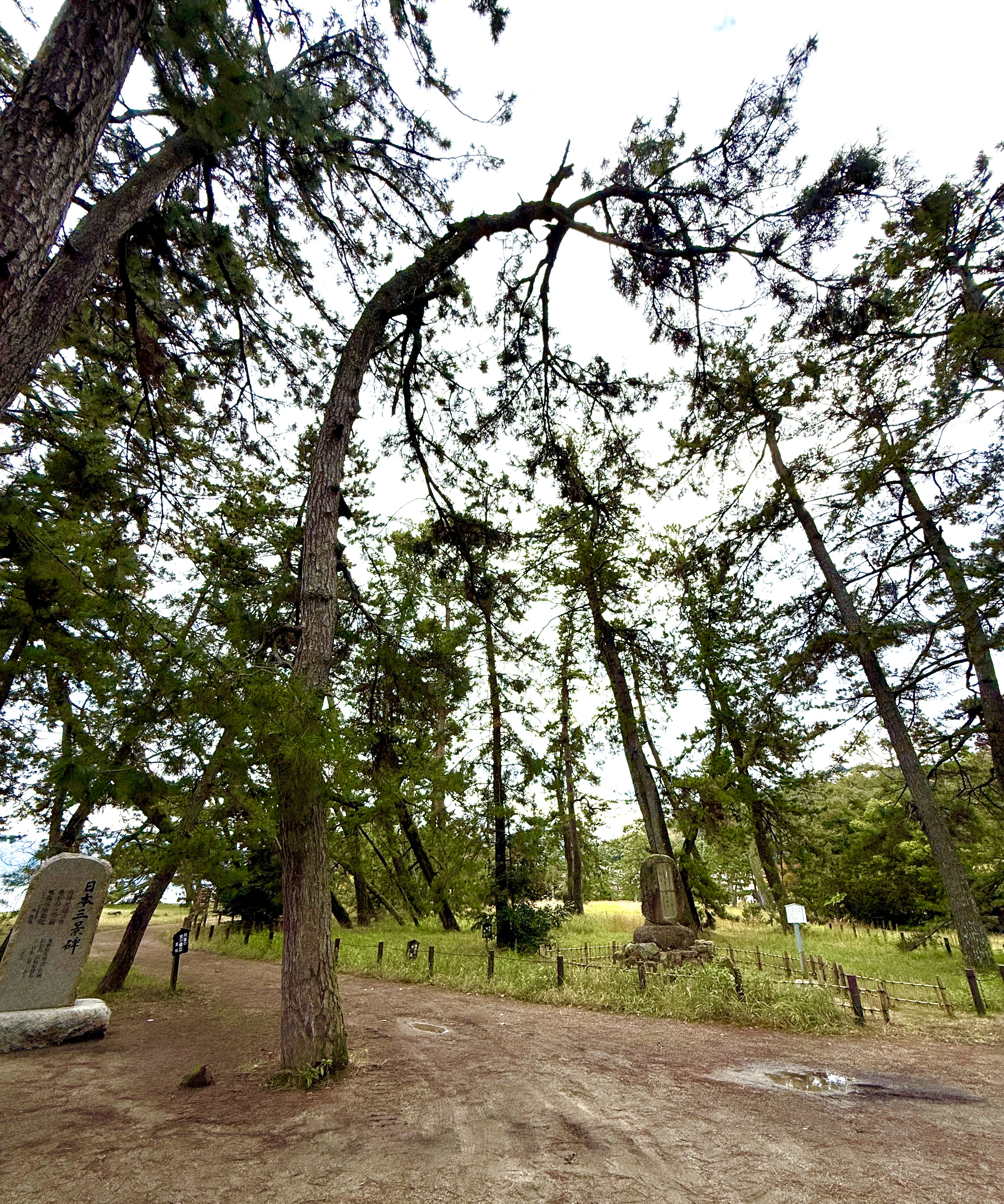
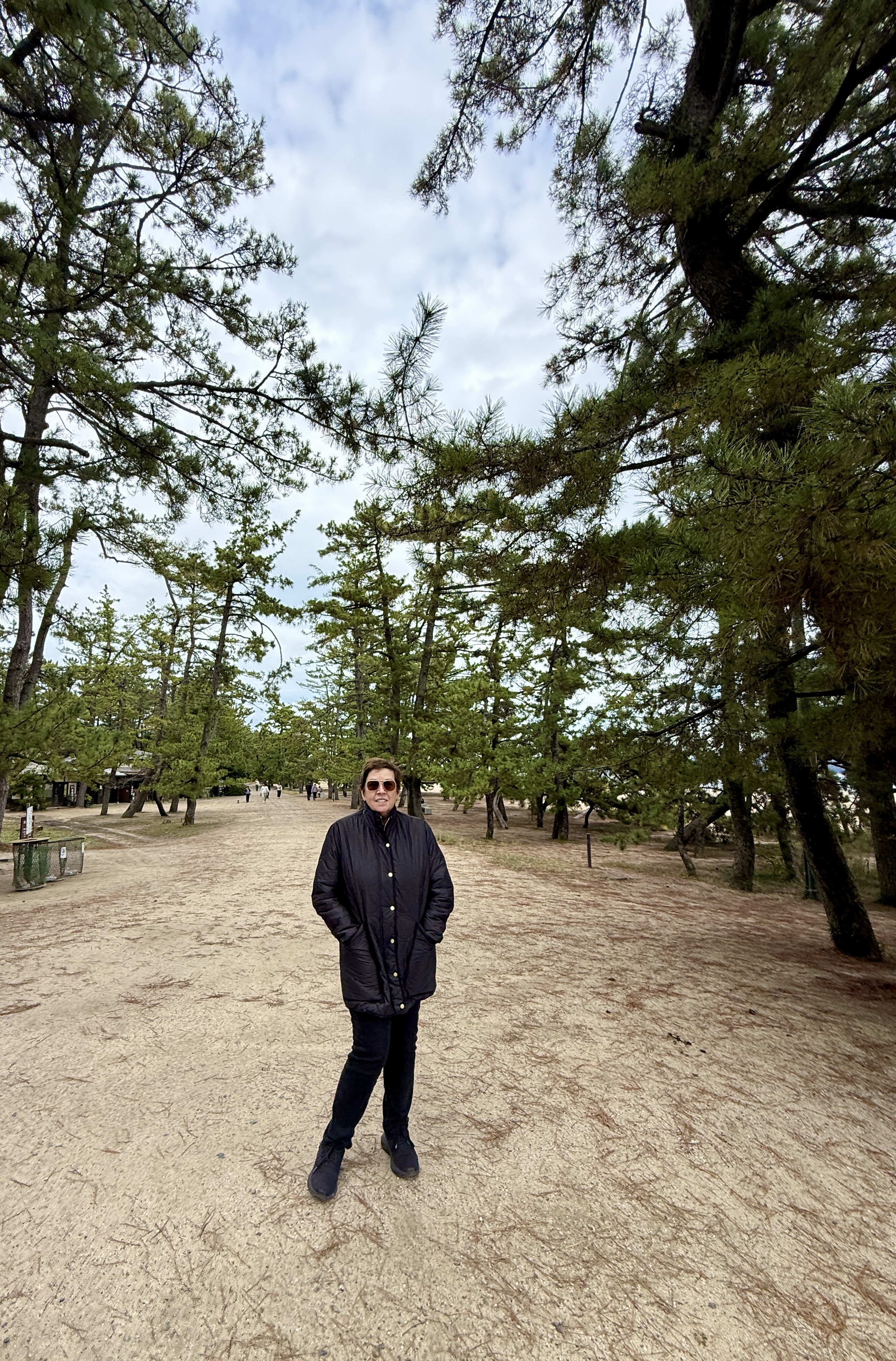
Earlier that afternoon, Yukiko had pointed out the wonderfully irregular pine trees at Amanohashidate and described them as “dancing trees.”
So apparently my day had begun with dancing pine trees and continued with dancing mushrooms.
Only in Japan.
Back to the Crab
The Wagyu intermission was lovely, but the crab wasn’t finished with me.
Next came another interactive course: crab hot pot, prepared in a traditional Japanese earthenware pot called a donabe.
Once again, I was in charge of the cooking. The ingredients were provided, and I added crab, enoki mushrooms, cabbage, and some lovely greens to the simmering broth.
The broth, which I believe was dashi-based, was absolutely divine. Delicate, deeply savory, and beautifully balanced.
By this point I was approaching maximum capacity, and there was still crab porridge and dessert to come.
I began wondering whether I needed a mantra for inner strength.
Or perhaps a feather.
The Great Slipper Escape
Of course, no Japanese dining experience of mine would be complete without a potential etiquette disaster.
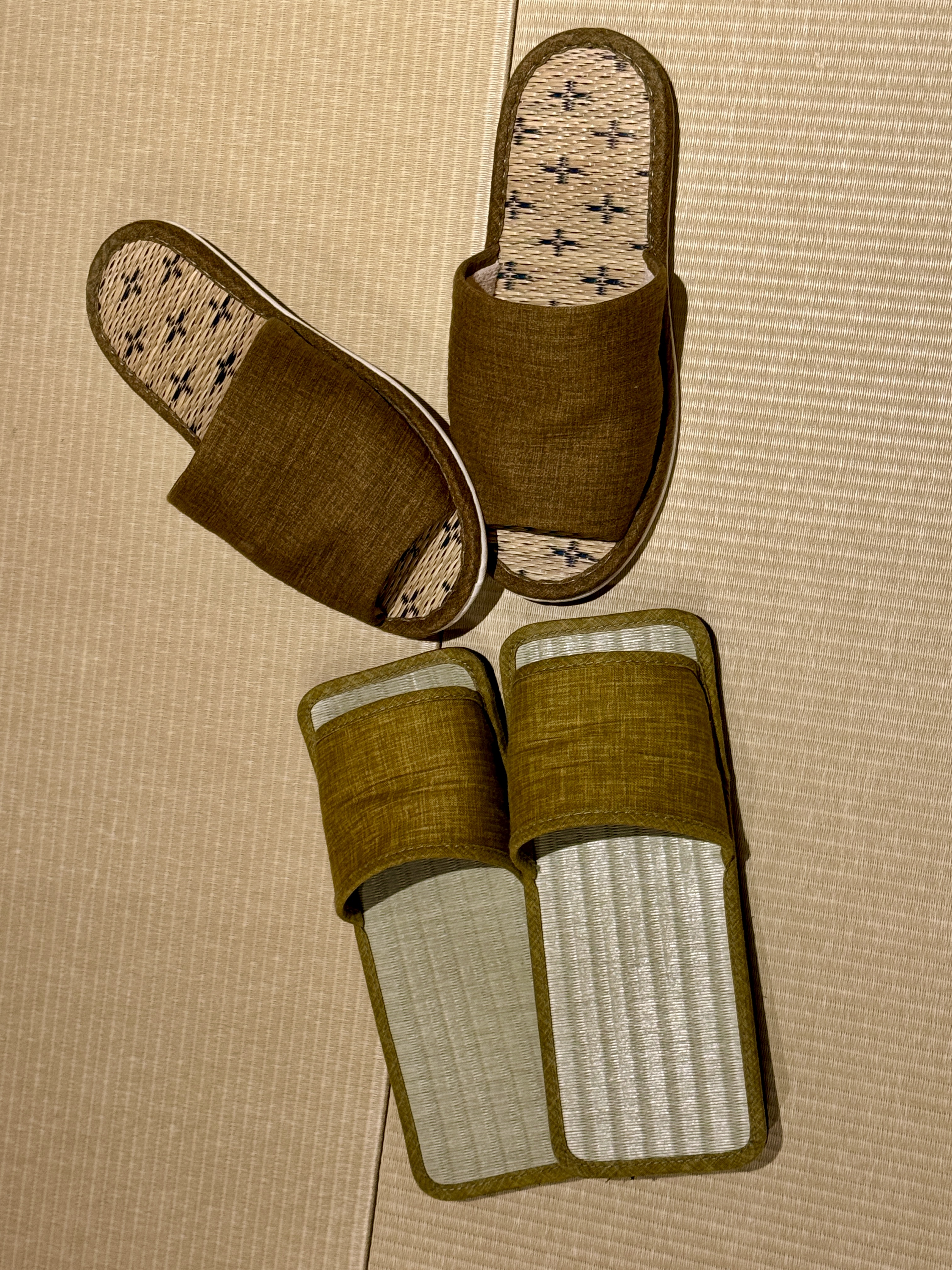
In Japan, outdoor shoes are frequently exchanged for indoor slippers. Simple enough.
Except that not all slippers are created equal.
There are indoor slippers, and then there are bathroom slippers. And these are most definitely not interchangeable.
Bathroom slippers belong in the bathroom. They stay in the bathroom. They do not accompany you to dinner.
I very nearly walked out of my room wearing the bathroom slippers instead of the proper ryokan slippers.
Fortunately, I caught myself before making my grand entrance into the dining room.
One can only imagine the horror.
Another international incident narrowly avoided by the silly American.
A Very Full Ending
By the time dessert arrived, I was thoroughly defeated.
The citrus dessert was lovely, light, and refreshing, and mercifully devoid of crab. I managed a few bites.
And then, sitting alone in my little dining area, I decided I was finished and quietly got up to leave.
Only to discover my waiter practically running halfway down the hallway after me.
It suddenly occurred to me that I’d simply wandered off without properly thanking him or saying goodnight.
Oh, good grief.
Between the slippers, the do-it-yourself cooking, and my unceremonious departure, I’m still learning the finer points of Japanese hospitality.
But what an extraordinary dinner.
The kitchen demonstrated remarkable skill in taking one seasonal ingredient and presenting it through so many different techniques, textures, and flavors. Even when I could barely manage another bite, I could appreciate the care and craftsmanship behind every dish.
And if I remember only one thing from this magnificent crab extravaganza, aside from the crab itself, it might just be this:
Never underestimate a maitake mushroom sautéed in Wagyu fat.
And always check your slippers before leaving the bathroom.